When there’s No More Film in Hell, VHS Will Tape the Earth

There’s a lot of nostalgia for the era of the video rental store, and not without good reason. There’s an intrinsic satisfaction found wandering a store searching for nothing in particular and letting destiny guide you. You can still get that feeling in bookstores and record shops, but in an era of online shopping it’s all too easy to click a few buttons and buy what you want.
Searching for hidden treasures becomes a perilous journey. Even if you find something that you want to take a chance on there’s no way of knowing if it will be worth the price. That was where the rental store reigned supreme. You didn’t have to gamble a small fortune in hopes that you found something decent. You could throw a few bucks down and take a chance. Maybe you’d get a masterpiece or maybe you’d get a complete pile of crap. (Mostly the latter). Either way, it was a couple bucks. What’s the harm?
What gets lost in the sands of time was a dark side to the rental store. Amid the Hollywood standards and the low-budget schlock, there was something mysterious. Something few people were aware of, and even fewer spoke of directly. And I’m not talking about the section behind the beaded curtain. Grandma said that’s where they kept the French movies and warned me to stay far away.
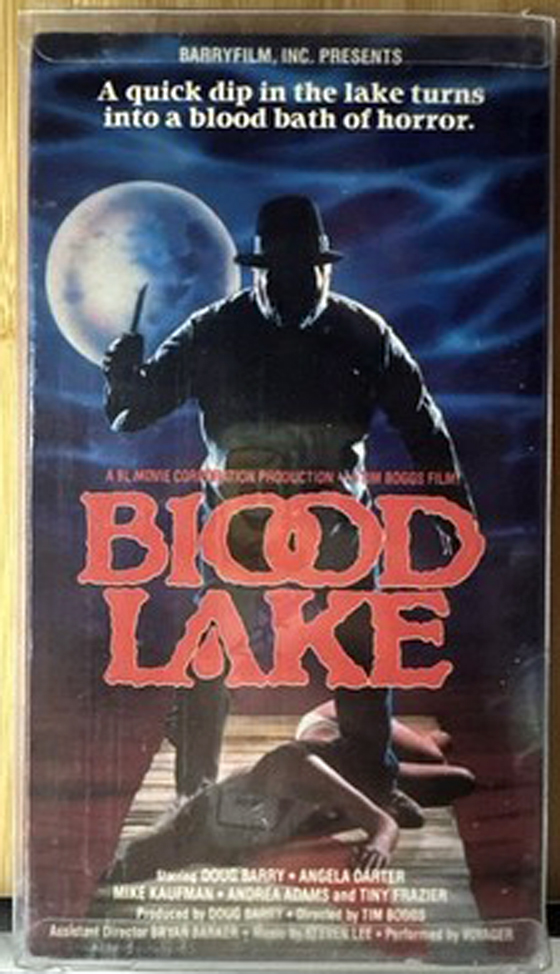
No, I mean right there in the plain open. Tucked away between a copy of, say, The Blob and The Boogeyman. You may not have found this exact movie but likely found something similar. It was somewhere in that region where I found a movie called Blood Lake.
Having reached an age where I was allowed to rent the classics of horror, but still barred from exploring the French cinema, I had largely made my way through the standards. Your Halloweens, and Friday the 13ths were well-worn territory, along with the relatively deeper cuts like Silent Night Deadly Night and Return of the Living Dead Part 3 (why they only had part 3 and not parts 1 and 2 is a mystery, but I’m sure there was a valid reason).
Once those became standards, I had to dig deeper.
On one fateful night, I took a chance. I’d never heard of this movie before, but it was called Blood Lake and had a picture of a guy with a knife on the front. How bad could it be?
Pretty fucking bad as it turns out.
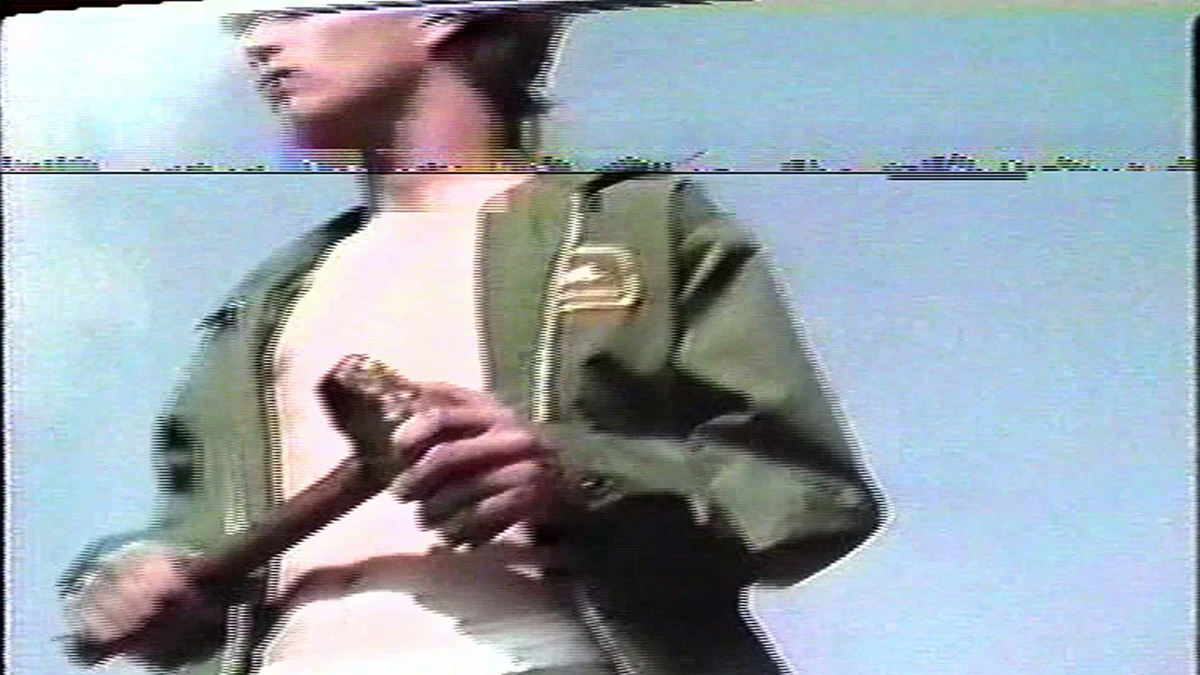
I couldn’t quite put into words what the problem was, but Blood Lake was just wrong. It looked like a commercial for a used car lot. The imagery was fuzzy but also flat. Colors were dull but somehow also too bright.
If I didn’t know any better, I’d think that the movie was shot with a home video camera.
I was unaware at the time, but Blood Lake was my introduction to the world of Shot-On-Video (SOV) cinema.
You see, when video stores first started popping up in the ‘80s, there was a major resistance from Hollywood. Profound dickweed and head of the MPAA, Jack Valenti, took to Congress to decry the new technology.
“I say to you that the VCR is to the American film producer and the American public as the Boston strangler is to the woman home alone.”
With that kind of attitude, few theatrical releases were produced for the home video market. But rental stores demanded movies regardless of who produced them. Quality was of little concern. Anything was better than empty shelf space.
Suddenly any goober with a video camera and a dream had the opportunity to be a filmmaker.
Now we can quibble on whether a movie made with VHS tape can be considered a “Film”, but I’ve spent so much time already finding euphemisms for the word “Filmmaker” that my thesaurus is either going to suffer a nervous breakdown or beat the ever-loving shit out of me. Possibly both.
Personally, I prefer the term “Motion Picture”, but such pretentiousness is uncalled for in a discussion about real art. And aside from that, most films these days aren’t even shot on film anyways (unless your name rhymes with Pissed Off Her Whole Chin), so we’ll just agree to call it “Film” and sort out the details later.
Boardinghouse from 1982 is generally considered the first horror movie shot on tape, though it occupies a bit of an odd space in the realm of SOV. While director/writer/star John Wintergate opted to use tape for budgetary reasons, it’s not quite the DIY horror that would come later. There’s an element of production value going on behind the scenes, and it’s clearly intended to have some kind of theatrical release.
It’s not particularly great, but at the same time it’s not particularly bad. Boardinghouse is a decent exploitation flick, though the only truly remarkable thing about it is its historical status as one of the earliest films shot on tape.
Sledgehammer from 1983 moves us just a little bit closer to the proper SOV style. Like Boardinghouse, Sledgehammer is shot on fairly professional-grade equipment and seems meant for a theatrical release, but it’s just askew enough to make you wonder if you’re watching a movie or in the throes of a fever dream. It makes you ask questions that the movie is clearly not prepared to answer.
Why would grown adults have a food fight? Have those two ever kissed a human before? What’s that dude’s workout regimen?
That last part is irrelevant to SOV, but star Ted Prior is shredded and I kinda got lost in his biceps for a second there.
Moving on, the characters are baffling, the plot’s nonsensical, and the dialogue’s atrocious. It’s kind of a piece of shit.
But there’s something intriguing about it. Were this your typical low-budget film, it would probably be remembered about as well as something like The Mutilator or The Boogeyman. Bad, but mostly forgettable.
Something about the VHS aesthetic shifts things. It feels voyeuristic. The acting suddenly isn’t bad, so much as simply wrong. As if you’ve stumbled across the home movies of the truly insane.
Sledgehammer shows some elements of promise. It’s not good, but it really is trying. At the very least it’s doing something interesting. Director David Prior, along with his brother Ted (owner of the dreamy biceps), eventually graduated into proper film, finding greater success in the world of low-budget action films.
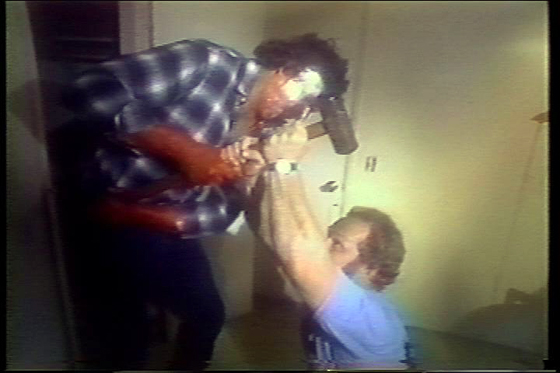
Their later works are actually pretty fun watches, so that clearly was their true calling. Sledgehammer, however, remains their most intriguing, albeit flawed work.
Video Violence from 1987 brings us ever closer to our destination, though like its predecessors it also struggles with trying to be a traditional movie, rather than embracing this new art form. Some movies exist to entertain. Some exist to send a message. The second variety takes great pains to embed its ethical stance within the subtext. They allow the audience to do the legwork and divine meaning as far as why the story panned out the way it did, and what significance that may have in this strange life we find ourselves in.
Related Content:
HOLE IN THE WALL Trailer and Interview with Co-Creator Derrick Carey
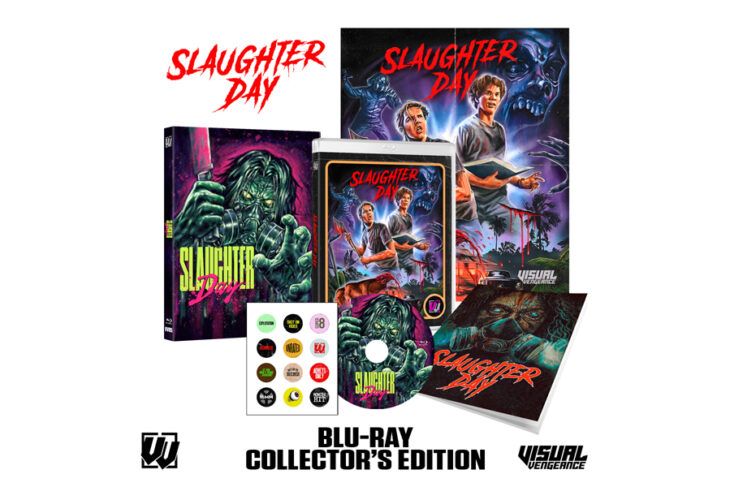
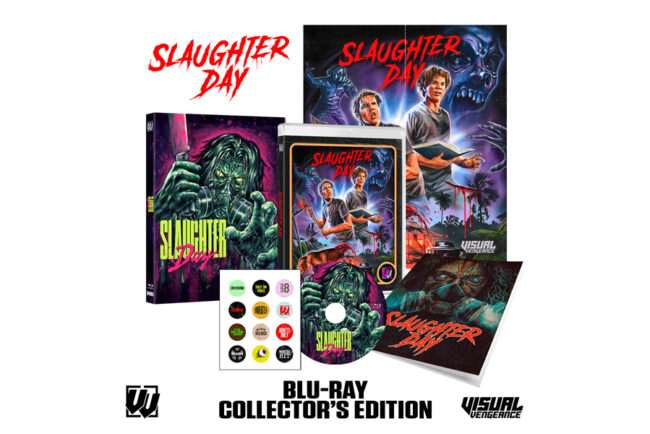
SLAUGHTER DAY Collector’s Edition Blu-ray Coming September 13 from SOV Curator Visual Vengeance
Video Violence on the other hand, doesn’t have time for all that symbolism crap.
It has strong opinions about the market for violent films and what that says about society. Rather than make this commentary through obscure metaphors and implications, writer and director Gary Cohen prefers to let the characters make the statements directly. This avoids any possible confusion for the viewer.
It’s simultaneously a critique of mindlessly violent media, while also itself being a fantastic piece of violent media. The mindless part is debatable
Shortly after its release, Cohen followed it up with a sequel appropriately titled Video Violence 2. Narratively and visually it’s something of a downgrade from the original, as ridiculous as that sounds. At the same time, it’s a lot more fun than the original. With part 2 it seems Cohen loosened his collar a bit and came to appreciate the intrinsic joys of senseless violence.
For all their low budget qualities, the three movies mentioned so far contain a (comparative) crispness to their production. Much like Blood Lake, they look like a used car lot commercial, or a low-end soap opera. Not high-quality, but put together with a modicum of professional standards
These are the types of projects that get made when you can barely afford the bottom of the line professional equipment. But what about those dedicated artists who can’t access even that? What are they supposed to do?
All they have is that old camcorder they got for Christmas three years prior. You expect them to use that to make their movie? Only the truly deranged would think that could be done.
Enter: The Truly Deranged.
Remember, the video stores needed movies. They didn’t care what kind. Anything was better than empty shelf space. And someone like Jon McBride was going to make sure they got what they needed.
His 1988 debut Cannibal Campout is everything you would expect from the title. People go camping and run afoul of cannibals.
That about sums it up.
It looks terrible, sounds worse, and the acting has about as much depth as the plot. In other words: Fine Cinema.
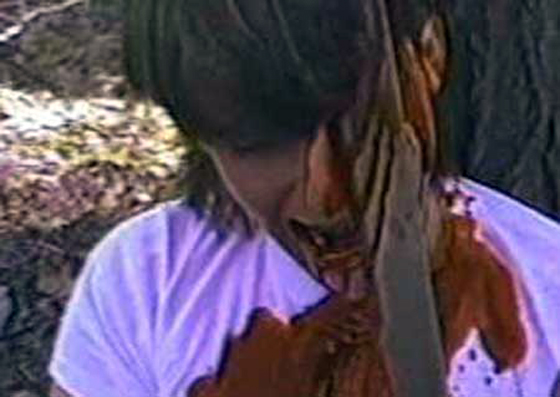
At this point the SOV movement truly became its own style. No longer was it moderately monied productions saving a few bucks by using tape. It was now the unhinged independent operators doing the best they could with their limited tools, funds, and competence.
But it’s the effort that counts. McBride’s enthusiasm pushes Cannibal Campout above its weight class. There are moments where my inner nerd took stock of what was actually a well-thought-out framing for a scene. These moments are usually short-lived and we’re right back into the joys of amateur DIY cinema again, but the effort is there and it is commendable.
In 1989 he released his follow-up Woodchipper Massacre, and again the title tells you exactly what you’re in for. Though much like Video Violence 2, Woodchipper Massacre is something of a step down. Somehow the movie looks worse than the previous effort and the performances follow the same trajectory. One would think that having gotten the experience of making one movie, the next one would be of higher quality. But when it comes to SOV, it seems the sophomore slump is a real problem.
And that’s a tough nut to crack when it comes to completely independent productions. Making one movie is kind of a shot in the dark. Maybe it will get finished one day. Making two is nothing short of a miracle. But making three? Without some kind of financial backing, it’s nearly an impossibility. There’s only so much time, money, and family members willing to put up with your bullshit. Anything after the second attempt tends to stall out.
The general advice given to artists when first developing their craft is seemingly counterintuitive advice to create as much as possible, with little regard to perfection. Rather than continually tinkering with your latest masterpiece, you should use the skills you have to complete the project at hand. Then move on to the next one. Eventually you’ll make something good.
Quantity begets quality, so they say.
I can’t speak much about the quality side of things, but when it comes to quantity the Polonia Brothers, twins Mark and John, got the memo. A seemingly endless stream of fantastic schlock has flowed from the Polonia camp for decades now and it all started with their nasty debut Splatter Farm in 1987.
As is to be expected, the plot is about as thin as the tape it was filmed on. But that’s not what’s impressive about Splatter Farm. Like their contemporaries, they didn’t have money, or actors, or any clue about how a story works. What they did have was a youthful obliviousness of how offensive is too offensive.
The beauty of Splatter Farm is that you have no expectation of where it’s going. Even as I dance around the risk of spoiling it, there’s no way for you to be prepared for the audacious slap in the face that Splatter Farm has in store. Whatever you think is going to happen, it’s not that. It’s much worse.
I’m not typically big on making demands. I believe that everyone should live their life as they see fit. One demand I do make, however, is that every horror fan should watch Splatter Farm at least once.

“Is it good?” You might ask.
Let’s just say it’s unforgettable and leave it at that.
Following Splatter Farm, the Polonias followed a similar track as Jon McBride. They heavily toned things down and settled into a more deliberately goofy sensibility. Their next few movies never gained the recognition of their debut, but that’s through no fault of their own.
Related Content:
Watch Trailers for SHARKULA and AMITYVILLE IN SPACE Coming This Summer!
By the mid-90s, the SOV movement was reaching its inevitable demise. The mom-n-pop shops were getting pushed out by the major franchises, and with the mainstream industry cashing in the desperate need for filled shelf space disappeared. Hollywood had come to the table, and there was little need for the SOV directors of the world. It was in 1996 that the Polonia Brothers pulled off a feat that was as equally impressive as it was wildly confusing.
They sold a movie to Blockbuster Video.
Maybe the Polonias took a page from the Roger Corman school and created a mockbuster to catch the wave. Maybe it was plain dumb luck. Either way it doesn’t matter. The biggest movie of 1996 was Independence Day, and rental customers were in the mood for more kickass alien invasion movies.
Instead, the Polonia Brothers gave us Feeders.
There’s a whole generation of ‘90s kids that have spent their entire lives trying to convince themselves that Feeders was just a nightmare. Surely something so poorly made, ugly-looking, and asinine couldn’t be a real movie.
Surely a movie shot for $500.00 (not a typo) didn’t get sold to their beloved professional establishment Blockbuster Video. And surely this wasn’t put out on the shelves for the general public to touch and look upon without some sort of personal protective gear. And there’s no way this cinematic atrocity would go on to become the biggest independent rental of 1996.
Right?
But it was no nightmare. It was a real movie. Feeders ruined a great many Friday nights and left a litany of confused, damaged children in its wake.
Sometimes the good guys win.
Of course, when it comes to Feeders, we can’t lay all the blame at the Polonia Brother’s feet. This was a team effort with our beloved Jon McBride joining forces with the twins to bring us a glorious piece of madness.
The Polonias followed up Feeders with a sequel, and a few more exploits, but by the end of the ‘90s, the corporate giants had largely squeezed the SOV directors out of the picture. The Polonias’ subsequent work never quite caught a break like it did with Feeders, but that didn’t stop them from continuing to churn them out, just for the love of the game.
Splatter Beach from 2007 was their next big hit (if we can use that sort of word). A sort of spiritual successor to Splatter Farm, though unrelated story wise, it brought the brothers out of the VHS era and into the digital world. No longer trying to make genuinely upsetting movies, the brothers embraced the inherent silliness of the SOV form and put together a fun sea-monster romp. McBride wasn’t along for the ride this time around, though the DVD extras do include a music video for his unnecessarily catchy song Surfing Cadaver.

The video rental scene had run dry, but the home DVD and budding streaming services were there to take its place. It looked like SOV in general, and the Polonias in particular were well on their way to finding their niche.
A year later John Polonia died at the age of 39.
When I heard of John’s death, I thought that was the end of an era. The end of SOV. We would never get a chance to see the brothers or their goofy mustaches ever again. It was over. They fought the good fight, but all good things must come to an end.
The thing we have to remember though, is we’re talking about art. True art may be impeded. It may be slowed down. It may face unspeakable tragedy. But when it comes down to it, true artists simply cannot be stopped.
I think a good argument can be made that the modern-day equivalent of the video rental store is the streaming service Tubi. It is an absolutely endless river of some of the best cinema ever made. They have the works of Godfrey Ho, Joe D’amato, and even the aforementioned action flicks of David Prior. In fact, a sizable chunk of the movies I’ve mentioned so far are available to stream on Tubi.
They even have the dreaded Blood Lake. With my refined palette, I’ve developed a greater appreciation for it now. It’s still not what I would call good, but I can appreciate it. It takes too long to get to the kills which are largely bloodless, and it puts way too much faith in my caring about the killer’s motivation. But it does have one or two genuinely creepy moments. And credit where it’s due, the song played over the end credits is pretty bitchin’.
But the true treasure I discovered in the deepest recesses of Tubi’s algorithm was the continued thriving of the Polonia filmography. Over the last two decades, rather than throwing in the towel, Mark Polonia has continued to keep the world of SOV cinema alive.
We’ve got Mummy Shark and Sharkula. One Million Babes BC and Amityville in Space. There’s even a Return to Splatter Farm. While not as nasty as the original, it’s a fun slasher full of blood, guts, and the complete incompetence that I’ve come to love.
Though honestly, I can’t really call it incompetence any longer. Mark Polonia has written enough screenplays that he knows the heartbeat of storytelling. He has a stable roster of recurring actors with enough experience to put on great performances, if they wanted to do so. Video and editing technology have reached the point that even the most basic consumer-grade equipment can deliver decent quality results.
To consistently make movies that are so distinctively bad is not an accident.
That’s a deliberate choice.
I love the fact that there are people like Mark Polonia out there. There are truly independent artists in this world making their films. Their way.

Are they good? Not really. But that’s not the point.
It’s evocative of The Myth of Sisyphus by Albert Camus. There’s something inspiring about a normal person fighting against the highest odds and achieving the seemingly impossible. Maybe they’re inspired by an inexplicable muse. Maybe they’re fueled with a deadly cocktail of pure hubris and ineptitude. It doesn’t matter. It’s still worthy of celebration, even if the end result is not the greatest.
Some people may think I’m getting a bit pretentious after all, and they’re probably right. I’ve never even read The Myth of Sisyphus. Grandma said I’m not allowed to read French Philosophy either.
But I’m not wrong. There’s beauty in the doing. The artistry is in the process. For all the barbs and insults we can hurl at the independent artists of the world, they’re actually doing it. While everyone else sits back to watch, they put in the work.
As the great R P McMurphy once said, “I tried, God damn it. Didn’t I? At least I did that.”