CARRIE: De Palma’s Bloody Baby Turns 50

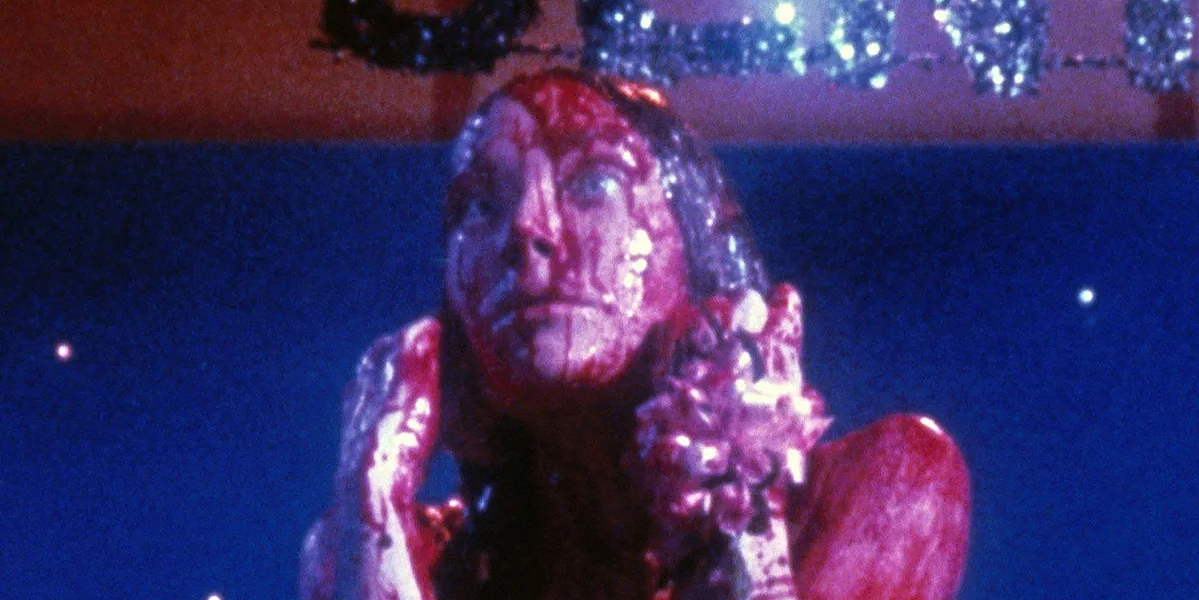
“They’re all going to laugh at you!”
As we are preparing to throw a party for our beloved Carrie, having already double-checked to make sure there were no buckets of blood waiting in the shadows, it’s wild to think that the novel this film is based on almost never happened.
The novel was starkly different than anything on the paperback racks at the time—a story about a young woman navigating the challenges of puberty and high school while also harnessing the power of telekinesis. It was a stunning debut novel by then unknown Stephen King. The tale of an outcast girl written by an adult man became a bestseller almost instantly.
What made it even more special was that King’s wife, Tabitha, rescued the beginning of a rough draft from the trash bin and encouraged her husband to keep going. King had the kernel of an idea but admitted he couldn’t write a convincing female character, so he tossed the pages. While cleaning one day, Tabitha spotted the writing and decided to check it out on a whim. The rest is history. Tabitha is cited as the person who propelled the novel to work, helping Stephen mold into form a sympathetic and unnerving young woman protagonist who devolves into Hell’s fury at the drop of a bucket of pig’s blood.
In 1976, Brian De Palma wasn’t the tour de force he’d soon grow into, but all the makings of a generational filmmaker were already tantalizing audiences. We were four years away from Dressed to Kill and seven years out from Scarface, but De Palma had already earned a reputation for working magic behind the camera with a captivating and stylistic approach that separated his work from his peers. He had a number of documentaries and short films under his belt, along with directing Phantom of the Paradise in 1974.
Some director/film marriages just click on every level, and the De Palma/Carrie pairing is a match made in heaven. De Palma’s use of lush colors and dreamlike camera work lends itself perfectly to the aesthetics of high school life and the perceived horrors that live within the locker-lined hallways.
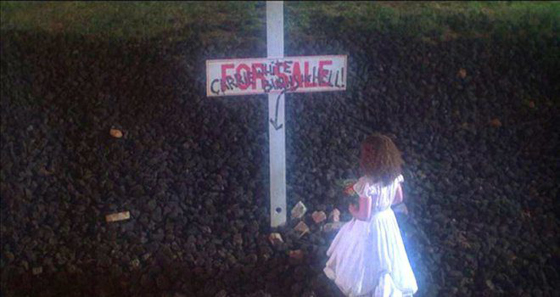
De Palma recalled that he read the book after a friend of his suggested it to him. “I liked it a lot and proceeded to call my agent to find out who owned it,” De Palma told Cinefantastique magazine in 1977. Soon enough, the film was given the green light. Armed with a faithful adaptation of the novel by Lawrence D. Cohen, De Palma was given a paltry budget of $1.6 million (eventually rising to $1.8 million) which did force a few scenes to be cut. None of those scenes would have been as fun to see as the White house being pelted with a rain of stones at the beginning and ending of the film.
Budgetary restrictions aside, an adolescent nightmare that quickly became a horror cinema classic was born.
In many ways, Carrie is a masterclass on filmmaking. With a run-time under 100 minutes, it’s just as lean and mean as the source material. The book is 199 pages long. De Palma, along with screenwriter Cohen (Ghost Story), pack a hell of a punch in a short amount of time. Audiences wouldn’t soon forget the story of Carrie White.
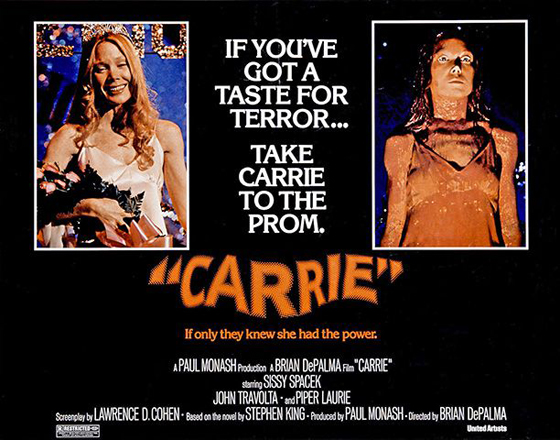
The film doesn’t do much to deviate from the novel’s plot, which tells the story of sixteen-year-old Carrie White (Sissy Spacek). Carrie is a reclusive social outcast with bad skin, crippling social anxiety and a mother from Hell. She also just so happens to be slowly realizing she has telekinetic powers. Truly a recipe for wholesome teenaged fun.
De Palma begins his movie with really the only scene that could kick off an adaptation of the King novel. It’s a dream-like sequence involving shower steam, high school gym students and perhaps the most poorly timed personal matter of all time. Carrie is attacked with feminine hygiene products by heckling classmates while she screams and cries in abject horror at the sight of her first menstruation. It’s an unsettling scene to watch, even fifty years later, as you’re forced to witness brutal bullying while also trying to grapple with the idea that a young lady could be so naive to the basic facts of life.
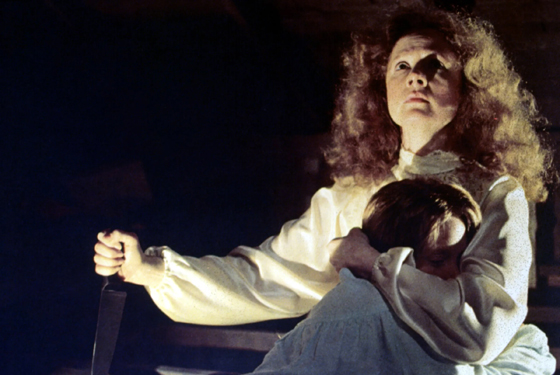
Carrie goes home that day and is locked in a ‘prayer closet’ by her religiously fanatical mother, Margaret White. Mama White is played with an absolutely skin-crawling ferocity by the iconic Piper Laurie. Carrie’s menstrual cycle is explained as a symptom of Carrie’s sins, naturally, and it becomes clear very quickly that Carrie’s school day bullying is the least of her daily concerns.
The ringleaders of the locker room assault are reprimanded at school and while Chris (Nancy Allen) gets banned from prom, she quickly begins plotting with her boyfriend Billy (John Travolta) to exact revenge on Carrie.
Sue Snell (Amy Irving) has a conscience and realizes the emotional torture enacted on Carrie has gone too far. While her former pal Chris is collecting pig’s blood by the bucket, Sue convinces her jock boyfriend Tommy (William Katt) to take Carrie to prom with the hopes that it will be a night the poor girl will never forget. Talk about understatement of the year!
With Sue hoping for redemption and Chris out for blood, Carrie begins taking note of her ability to move objects with her mind. As she reads about the phenomenon, the school hunk Tommy invites her to the big dance and after some assurances that this is no prank, Carrie accepts. Of course, any joy or excitement is instantly dashed when Carrie informs her mother of the invitation. Margaret White, of course, forbids her daughter from going, but Carrie has teenaged angst and telekinesis on her side. The two end their conversation in pretty typical mother/daughter fashion, with accusations of witchcraft and a torrent of religious babble and rage.
Related Content:
All Hail the King: A Tribute to Stephen King’s Short Story Canon
On the Fringe: Villains as Social Outcasts
Horror Movies’ 5 Creepiest Psychics
Prom arrives and Carrie is beautiful, living her best life and finally feeling like maybe things are looking up. Alas, Chris and Billy have fixed the Prom Queen and King voting to ensure Carrie and Tommy are crowned. As the couple celebrate on stage with a mix of clapping classmates and sneering bullies, a bucket of pig’s blood is dumped on Carrie from the stage rafters. Drenched and in almost a catatonic shock, the last straw comes when Tommy is hit on the head with the empty bucket, knocking him unconscious.
The culprits of the prank begin to laugh, and Carrie begins to properly reveal to people that she is not one to be fucked with. The gym doors are sealed shut, a fire hose goes wild and a basketball hoop is sent crashing to the ground, killing the teacher who seemed to have some sympathy for Carrie. Before long, the principal is electrocuted and another teacher bursts into flames, sending the whole gym up in smoke, screams, and breathtaking imagery by cinematographer Mario Tosi.
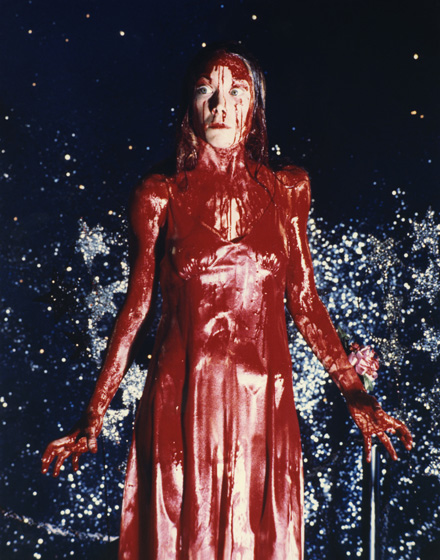
Carrie walks home covered in blood and still wild-eyed from her nuclear blowout. Chris and Billy find Carrie on the road and attempt to run her down, only to have their car thrown off the road and bursting into a ball of flames.
With prom night winding down earlier than expected, Carrie takes a bath and seeks solace in her mother’s arms. Margaret proceeds to share with Carrie that she was conceived on a night when Margaret was drunkenly assaulted by her husband. As if that TMI wasn’t enough, then Mama White stabs Carrie in the back (literally) with a kitchen knife. Take note: you should never bring a knife to a telekinesis fight. Carrie dispatches of her own mother, using just about every sharp kitchen utensil known to man, before bringing the house down on top of them.
The film also has one of the best and influential jump scares in horror history, but in sharing any of that fun, I’d be spoiling the last morsel of the movie’s ending.
The film had its premiere on November 3, 1976, in a handful of theaters in the Washington, DC area. Later that week, the film opened in additional theaters across Chicago before a larger release later in the month in New York and Los Angeles.
The film was met with fantastic reviews as Carrie tore through the competition to the tune of nearly $34 million at the box office. Roger Ebert gave it a 4.5/5-star rating, calling it “an absolutely spellbinding horror movie” and “an observant human portrait”, which “is what makes it so good.”
In a year that included Taxi Driver, Rocky, A Star Is Born, All the President’s Men and King Kong, the story of Ms. White and her supernatural powers was widely regarded as one of the best of the year. It is an unnerving but fairly accurate portrayal of society in general, with school bullying and religious fanaticism being the focal points at a time when the country was still dusting themselves off from the Vietnam War and the Watergate scandal, respectively. A film that called out the failures of institutions and structures that we were led to believe were always going to do right by us hit some raw nerves.
Perhaps you’re more likely to see it as a study in society’s wariness of the female body. Some say the so-called “male gaze” haunts the opening sequence in the locker room as semi-nude and completely bare young ladies are shown in slow-motion. Many others, including myself, would suggest this opening sequence is meant to represent the last moments of innocence in the film (and for the young ladies involved) before the first drop of blood, in a thoroughly soaked film, falls. The discussion about the pig’s blood at the prom representing what Margaret White sees as her daughter’s “impure blood” born of sin is another interesting rabbit hole to slide down.
Carrie went on to be nominated for a number of awards, including the Academy Awards and The National Society of Film Critics.
As time has gone by, Carrie has garnered a rightful spot among the better horror films ever made. The film continues to be listed as one of the best horror films ever, fifty years after its release, and spawned a sequel, a made-for-television adaptation, a remake, and multiple stage plays.
But it all started with the seminal film in 1976, about a young lady and the classmates that tortured her until their day of reckoning arrived. Brian De Palma’s vision behind the camera brings Stephen King’s novel about misogyny, bullying, and religious hysteria to life in the darkest of red hues.
“If only they knew she had the power…”